
It’s Saturday morning, and I’m in San Antonio.
All I need right now is to get to Pleasanton, Texas – about a 45-minute drive from my hotel.
Recap. I’m on total adrenaline mode right now. It’s just me, my Nikon Df cameras, my Maksutov-Cassegrain MC MTO-11CA 1000mm F/10 mirror lens (for the big shots), my Vivitar 19mm f/3.8 lens (for the eclipse trail shots), a couple of digital shutter releases, and a lot of energy.
I’ve scoped the weather forecast every single day. Nothing but clear, sunny skies. Optimal weather for eclipse photography. Swank.
I’ve already made arrangements with officials at the Pleasanton city office to set up my gear at Atascosa River Park in Pleasanton. And let me say this – the people at the Pleasanton offices, every one of them, were fantastic. Helpful. Considerate. Absolute treasures.
Heck, I even asked them to join me in a selfie.

Thanks to my PhotoPills phone software, if I set up at this exact location, I’ll not only get a breathtaking shot of the annular solar eclipse as it skies over Texas, but I may just get the “ring of fire” in the perfect spot for a photo capture.
The eclipse itself will start at 10:25 am, with the moon passing over the sun between 11:52 and 11:57 am. A quick five minutes, with 11:54:50 a.mm. having the moon dead center in the sun. And the whole show ends at 1:30 p.m.
Unlike a total solar eclipse, it is never safe to look directly at an annular eclipse without using special protective eyewear. So as much as I would love to take off my solar shades and just marvel at what’s out there … I’d rather not suffer blindness in doing so. Trust me, this is REALLY what your parents meant when they said, “If you don’t stop this, you’ll go blind.” Ha.
My older Nikon Df – the camera I’ve loved and used for over a decade – will take photos in sequence, one minute apart, as the sun crosses the sky. I put a Vivitar 19mm f/3.8 lens on the chassis – the Vivitar is my widest-angle lens in my arsenal. I’ve also screwed on a 62mm solar filter so as to not incinerate my camera’s internal sensor. If I planned this properly, I should have the “ring of fire” directly over the Atascosa River, which should appear in the water’s reflection. Yeah, I’m playing the angles here. If I pull this off, my next trick is to go to the nearest billiard hall and try to hit a cue ball so that it bounces off eight rails and stops on the center of a $100 bill.
Meanwhile, my newer silver Nikon Df will capture the phases of the eclipse up-close – I’ve attached my Maksutov-Cassegrain MC MTO-11CA 1000mm F/10 mirror lens to the chassis. The mirror lens also has a solar filter over it, which will remain in place throughout the show. My goal for this camera is to capture all the phases of the eclipse, including some sunspots if possible. These photos can be used for a future project, or as an alternate collage if my black Df fails me. I’ve written the specs on the back of my hand, just in case. ISO 100. F/10. Shutter speeds 1/125, 1/60 and 1/30. White balance for daylight. Bracket every five minutes. I want to see sunspots on those photos. Nice, discernable tasty sunspots.

This is the path of the solar eclipse. Please note that although the video gives out time in Pacific Standard Time, Texas is on Central Time, so technically add two hours. Pleasanton is approximately 35 miles east of San Antonio, right in the heart of the path of annularity. In other words, if I’ve lined this up properly, I’ll get a perfectly-centered “ring of fire” at 11:55 a.m. Central Daylight Time.
I set my cell phone for five-minute alarm bursts. I’ll use my Nikon’s Live View feature to properly center the sun in the photo. The sun moves fast across the sky, so although my black Nikon Df can stay stationary and catch the entire solar trajectory, my silver Nikon Df is capturing the sun up-close. That photo at 11:15 am won’t be in the same location at 11:20 am. There are no breaks allowed.
And then I got to Pleasanton. And the weather threw all my plans out the window.

Luckily for me … I’m a quick thinker.
The black Nikon Df stayed in the rental. The cloud cover crept over the Atascosa River, making a time-lapse of the eclipse nearly impossible. Everything needed now has to come from my silver Df with the solar filter lens front. If this cloud cover clears … I can still get some great images.
Now a bit of a note here. I rented a tripod from a camera store in San Antonio. I would not have been able to bring my trusty Vanguard Tracker with me on the flight. The camera store rented me a Manfrotto tripod. This thing was STABLE. It was solid.
It also had a stuck vertical axis.
Which meant that every time I tried to photograph the eclipse … I had to bang on the vertical axis rod just to get the camera to focus on the proper spot. Ugh. It felt like the previous owner had lubricated the tripod with Gorilla Glue.
Still … through the clouds and the tripod struggles … I did get a few eclipse shots. Check them out.


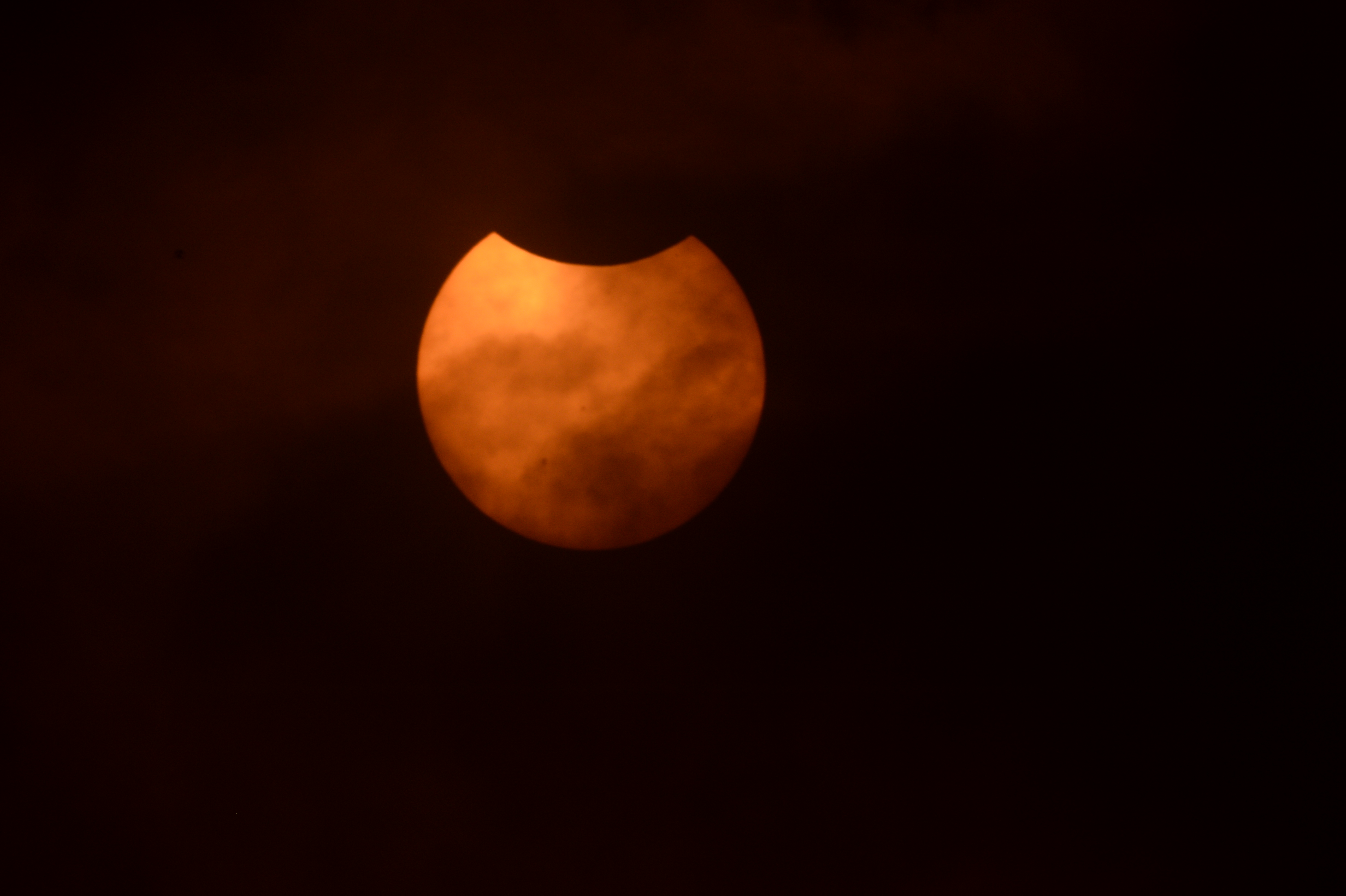
But even in those tiny cloudy breaks … the sun was FIGHTING for attention.
Then came a thick cloud mass. Oh, great. Maybe it will clear in time for totality.
And then … thirty minutes later … the sun poked past the clouds, bright and brilliant in the sky.
Let’s get those shots, shall we?


Just a few minutes away from totality … maybe I can get Baily’s Beads while I’m at it.
And then the clouds came back. And I couldn’t get the tripod to move on that jammed vertical axis. One thing after another after another.
Seriously? Ugh.
Totality is only minutes away.
And at this point, I had three options. I could:
- (A) shoot blindly and hope I catch totality.
- (B) pray that the clouds will part for just ten seconds.
- (C) crawl all the way back to Albany with my tail between my legs and my head hung in shame.
And in a second, I chose Option D.
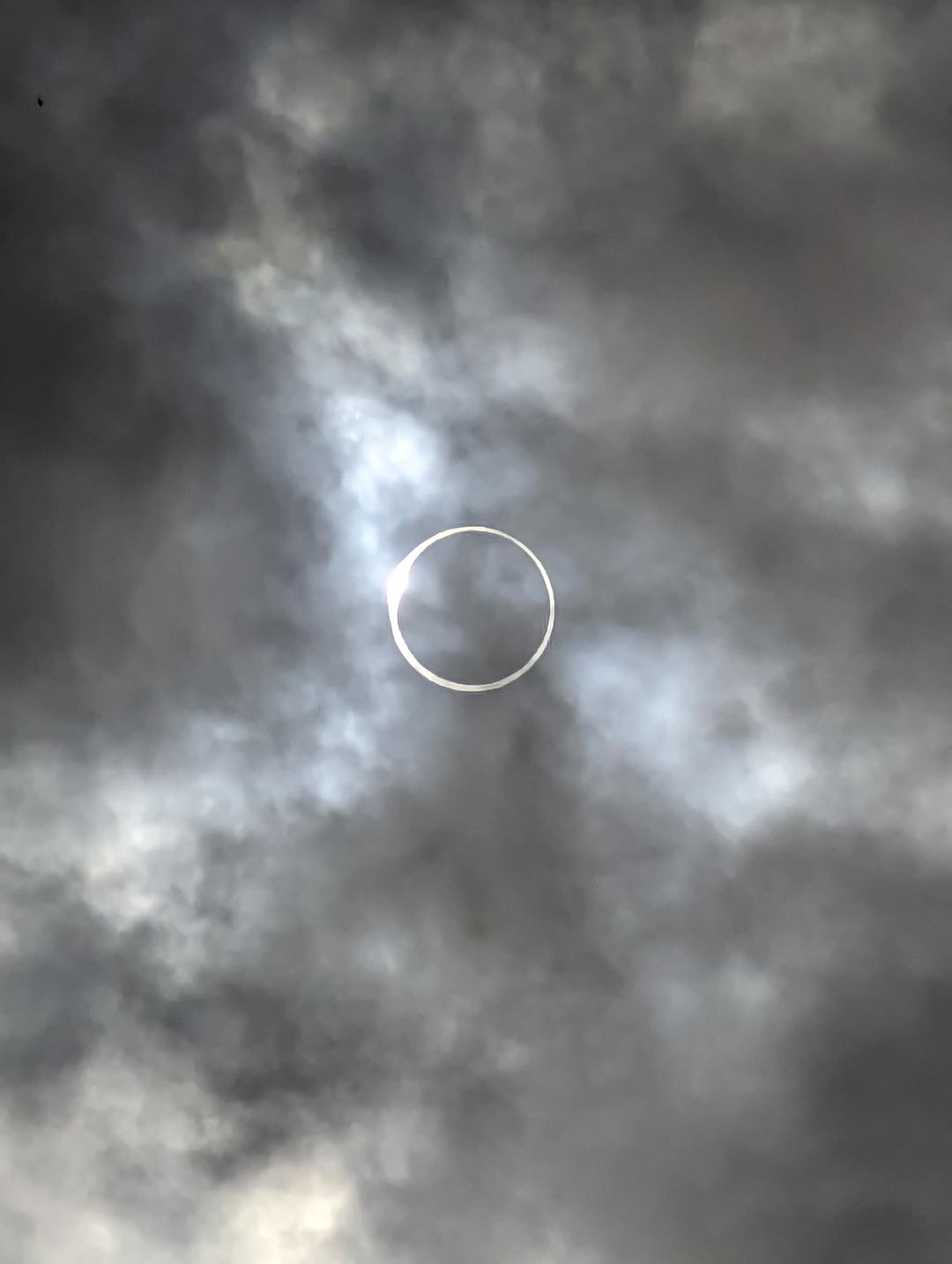
Because, for a glimmer of a second, totality barely peaked through the clouds.
And with the speed of an old-time gunslinger, I whipped out my Google Pixel 6 Pro camera, aimed it at the cloudy sky, zoomed in as much as possible … and pressed the shutter button like I was on the final round of Defender.
And look what came from it.
WHOA!!!
I GOT IT!!
Totality at the final seconds possible! And even with all my camera gear and everything … it was quick thinking and a fast hand to pull this photo right into Competition Season 2024! Maybe if I enhance the detail some … flip it to black and white … I don’t know, I have so many choices right now and every one of them is exciting!!
The cloud cover came back, and any possibility of snagging the rest of the eclipse was fruitless. But I don’t care. I got the totality I wanted. I got the images I wanted. And thanks once again to the people involved at the Plesanton City Board, including events coordinator Terri Cuevas (whatever they’re paying her, they should triple that sum in her next paycheck). Without their help and support (and a few post-eclipse Tex-Mex tacos for the drive back), this fantastic image wouldn’t be possible.
Ring of Fire totality eclipse achievement – unlocked.
And you know that photo’s heading to Competition Season 2024.
For as sure as there’s a sun in the sky.

 Chuck The Writer
I was going to take a stab at this myself, only staying to home. Same thing happened; the eclipse was eclipsed by clouds. They cleared up after the event was over. C’est la vie.
LikeLike
You did it…so amazing; with all good wishes for the future plans with the finished photo projects.
LikeLike
“Chuck said, “I’m not throwing away my shot,” long before he heard Hamilton.
LikeLike