I’ve had success with my pictures at the Big E – in three previous seasons, I’ve snagged ribbons with seven of my nine photos, including Midnight at the Palace Theater, The Jumbuck and Butterfly and Citrus – but success hasn’t been easy.
Unlike all the other photography competitions that comprise my “competition season,” the Big E’s rules are the most strict. Photo dimensions, matte sizes, categories, all of them are more strict than my fourth-grade schoolteacher. And I mean Mrs. Armstrong from Patrick F. Lyndon Elementary School in West Roxbury, Massachusetts, school number 6 of The Twelve. She was the one who once said to me, when I questioned something that didn’t match up with the way I was taught in school number 5 of The Twelve, “Young man, are you telling me that you are right and the textbooks are wrong? Detention for you.”
Ah, fourth grade. Good times. </sarcasm> Anyways…
I planned on starting early for my Big E competition photos. And by May, I had an assortment of pictures to choose from. This would work for me.
Then I received some interesting news.
Beginning with the 2014 season, the Big E’s photo competition will have separate categories between those photos taken with a “point-and-shoot” or camera phone, and images captured with a DSLR or SLR camera. And after confirming with the organizers that “DSLR” and “SLR” actually mean focusable cameras that include TLR’s and rangefinders, then my photos were set like Chet and Annette in Boba Fett’s Corvette.
Hmm… I wonder if that means I could use my single-focus aim-and-fire AGFA Clack as a “point and shoot” camera? Nah, don’t push it, Chuck. There’s no need to split hairs on this project. In fact, I’ve split so many ends with my Big E photos, it feels like I should have spent six months in a leaky boat.
The strictest rule that the Big E enforces on its entrants is that the photograph must be of a single, distinct exposure in the camera. They’re very clear on this. “Must be a color (or black and white) print from a single, original exposure.”
In the past, that’s meant –
- No double exposures
- No HDR shots (even though my Nikon Df camera can take two instantaneous pictures and convert them into HDR in the camera, it still violates the rules)
- No panorama shots in which I would use a software program like autostitch.de to combine pictures
Even though it means all these things… I could still get away with, should I so desire:
- Cross-processed pictures (dipping C-41 film in E-6 soup, for example)
- Redscale pictures (flipping the film backwards so that the emulsion side is exposed in the camera)
- Revolog “prepared film” pictures (hey, if there’s crackle or lines or whatnot ON the film prior to exposure…)
- Oddball Lomography films (like LomoChrome purple).
- Light trail or star trail pictures, so long as it’s one exposure and not stacked photos
And in even considering all this, I’m thinking to myself that I’m taking a big chance. Like I’m trying to be too smart for my own good.
Well… I don’t care. Part of experimenting with photography is trying to achieve something that hasn’t been achieved before. Take a chance now and don’t give up.
Still… I do have to behave myself whenever possible. And with that in mind…
Here are my three entries for the 2014 Eastern States Exposition “Big E” photography competition. They are:
BEECHER CREEK FALLS
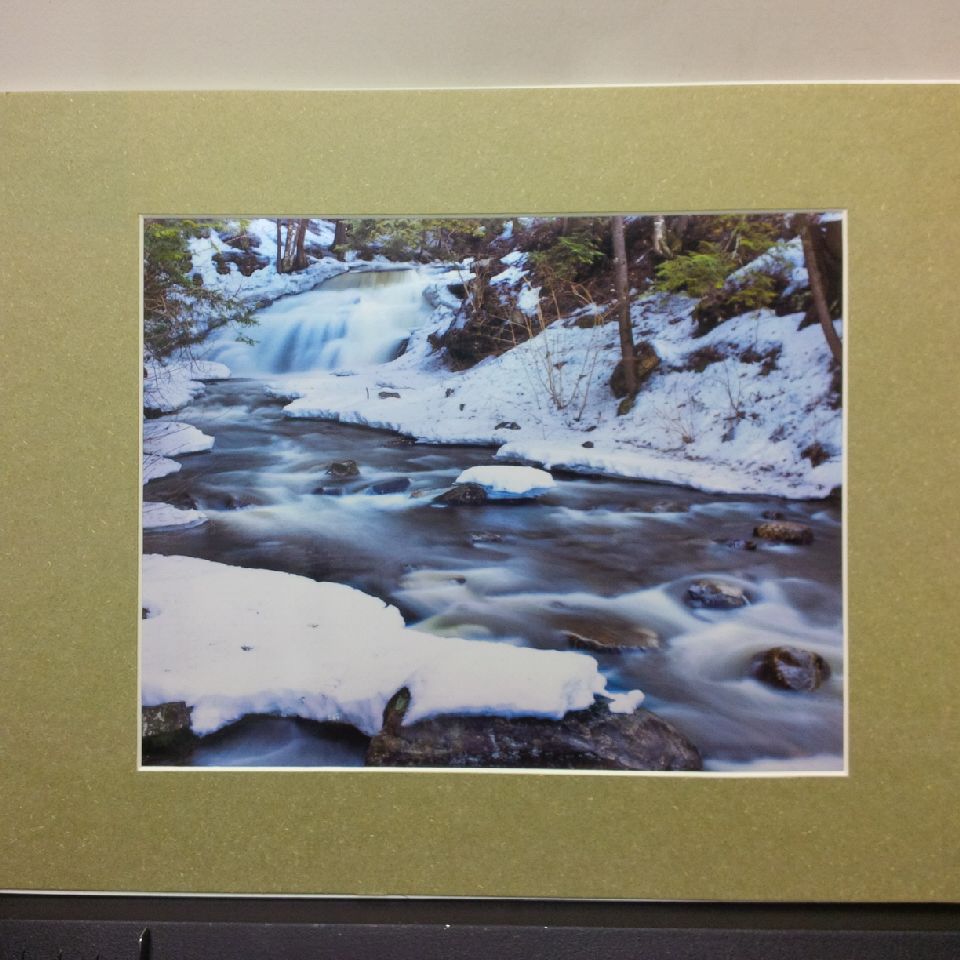
I’m going with a metallic print and a light green matte on this one. It’s getting entered in the “landscapes” category.
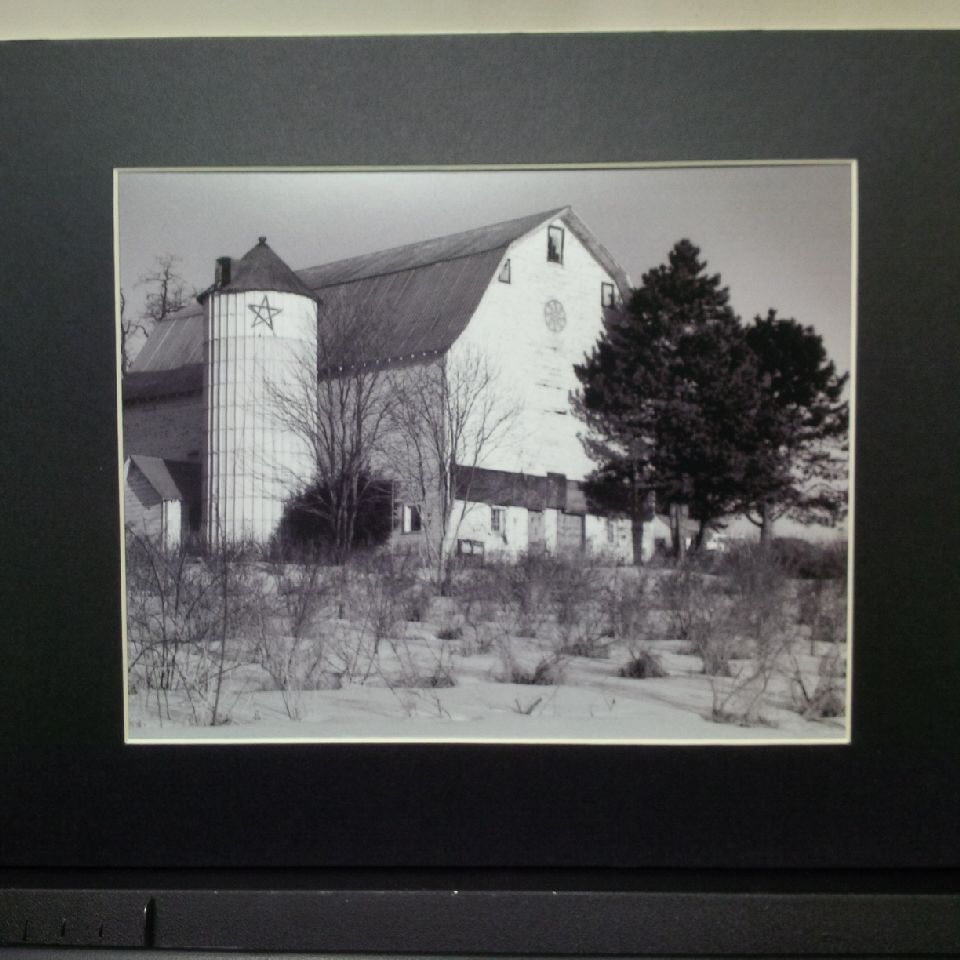
THE STAR BARN OF HARMONY CORNERS
This one will find a place in the “architectural” section of the photo contest. And it’s the first image captured with my new-to-me Kodak Medalist II. Interestingly, both of these pictures were taken in Saratoga County, and I think that’s the first time I’ve ever entered multiple photos from Saratoga County in the same competition.
JESUS SAVES
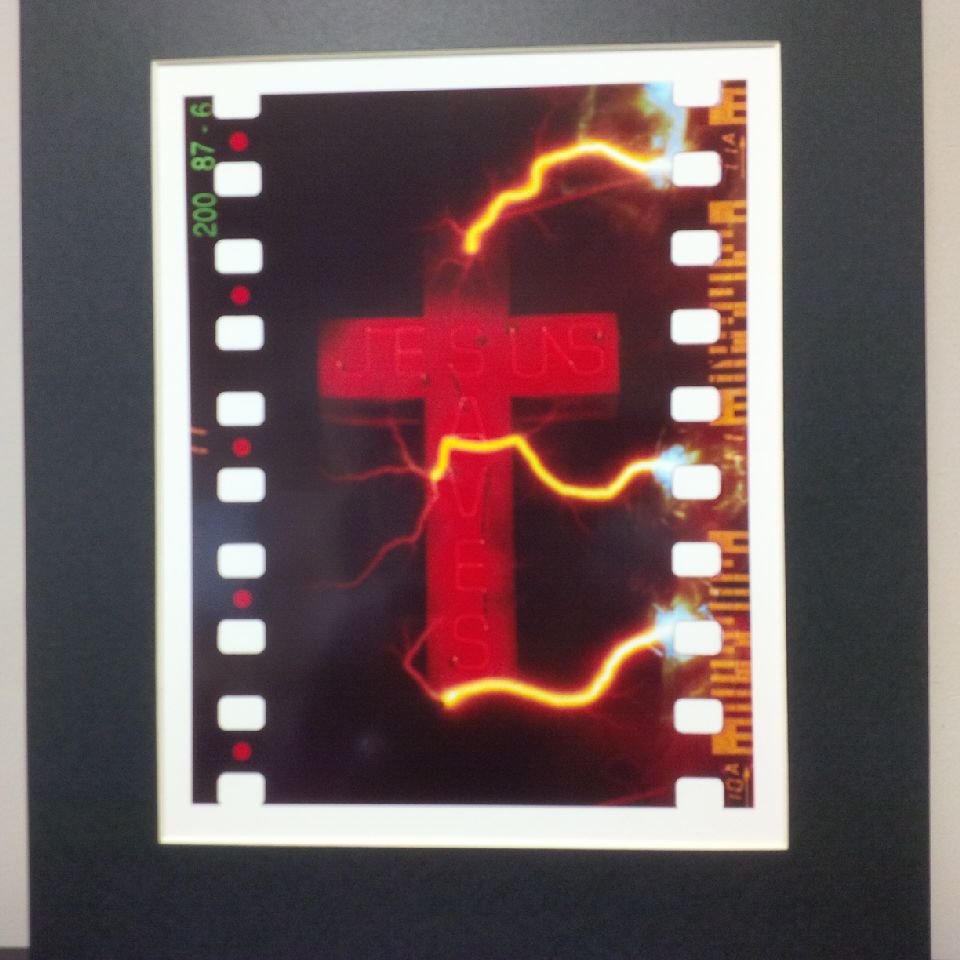
Yep. Single exposure. So what if the film came pre-printed with lightning strikes? The photo was still a single, original exposure.
And to make things easier for the judges, I added an index card to the back of the artwork, a description as to how I created this image.
“Jesus Saves” was photographed with a special pre-printed 35mm film called Revolog Tesla 2. Revolog manufactures several various “pre-printed film” compounds, including film with scratches, film with various tints, and film with colored bubbles and blobs. Revolog’s “Tesla” film comes with lightning strikes and bolts already on the film. The strikes coincidentally matched up with the neon subject. The original negative will be provided upon request for the judges to examine if necessary.”
Or, I could have just put a link to the blog post where I achieved this effect.
Rather than drive all the way to Springfield and back, I actually shipped all three entries to the Fairgrounds (along with a mailing label and Priority Mail return postage). And when the Big E finally debuts, I’ll drive out and see how my pictures turned out.
My decisions are clear. Now let’s hope that my choices were correct.

 Chuck The Writer
You must be logged in to post a comment.