I’ve owned my original Nikon Df for the past thirteen years. A couple of years ago, I had it modified as a dedicated infrared shooter. And with warmer sunny weather on the horizon, I took it out a few weeks ago for a photo shoot.
This was part of my integration of the Nikon Df with my Pentacon Six TL-connected Zodiak 180-degree bubble lens, along with custom-built inner infrared filters.
And at first … everything looked and worked well.
Until I saw this picture.

Yikes. Look at the upper left section of the photo. Dust spots. Tiny, microscopic dust spots that, once they attach to your camera sensor, appear as big black globs in your photos.
Ugh. Now I have to take the camera down to my camera tech and have him wipe the sensor. And while that’s going on, I can’t use the camera for a few days until I get it back.
Over the years, any time I saw a spot on my photos, this was my next step. Bring the camera to my camera tech and have him wipe the sensor. And then some time later, the sensor would pick up dust again, and I’d have to bring the camera BACK for another wipe.
Trust me, those sensors attract dust the same way Facebook posts attract trolls.
But I thought to myself … certainly this can’t be too hard to fix. Why can’t I wipe the sensor?
And, of course, once I had this niddling thought in my mind …
I needed to investigate.
And a few dollars later, I purchased a DSLR sensor wiping kit. What I thought might be an overly super-technical procedure was simply a rubber squeeze air blower, some wiping wands, and a small bottle of cleaning fluid.
Okay … deep breath. I need to do this. I need to know how to do this. I need to be self-reliant.
Cleared a space on my table. No dust in the vicinity.
Placed fully-charged batteries in the DSLR, and then set the camera for mirror lock-up. Once I pressed this button, the camera’s internal mirror would swing open, and I would see the sensor clear as day. I might not see the dust with the naked eye – some of that dust may only have an actual size of a couple of microns – but it’s there and it’s static-glued to the sensor like spackle on a ceiling.
Wiping wand and cleaning fluid are nearby. Sort of a photography mise en place.
I unwrapped a wiping wand from its bag and dabbed two drops of cleaning fluid on the wiping blade. Then I carefully wiped the sensor, using a gentle but firm motion right to left, then left to right. Tossed the wand afterwards – you only use a wand once. Released the mirror lock-up.
If I did this right … I should have cleaned out most, if not all, of those annoying dust dots.
If I messed this up … I would have wrecked my dedicated infrared Df camera.
Only one way to see.
Slapped a camera lens on the chassis, put an SD card in the camera body, and went outside for a quick photo shoot. Aimed for the sky, which should show me if there are still massive dust spots on the sensor.
And in the end … this came out.
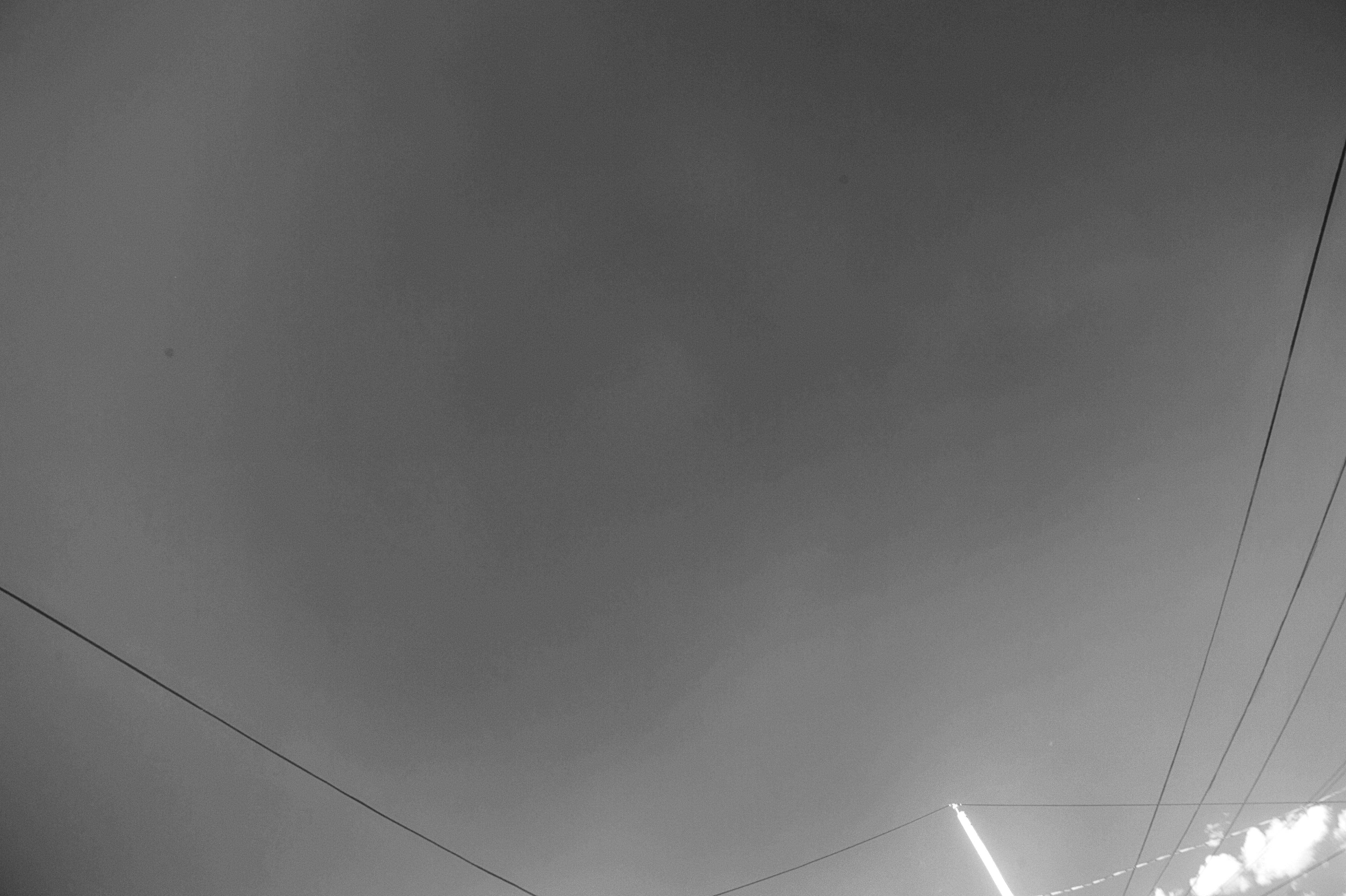
Okay. There’s maybe one or two dust particles there, but in the future, I can clone those off of finished products. And I really had to enhance this photo just to even spot THOSE tiny residuals.
So I did okay on my first true attempt to clean my camera sensor. I can still use this infrared Nikon Df without spending an hour and a half cleaning out 65 different dust particles.
For now, I’ll call this a win.
And I’ll take my wins where I can get them.

 Chuck The Writer
A rewarding addition to your expanding skill set.
Perhaps a niche side hustle one day…
LikeLike