I have been chasing the “Buena Vista Panorama” image for AGES now.
Some background.
My Grandma Betty told me this story about how, when she and my Aunt Elaine visited Europe, they attended a guided tour of Rome. The tour guide spoke no English, while neither Grandma Betty nor Aunt Elaine spoke any Italian. But at some point in the tour, the guide pointed to something and said, “Buena Vista Panorama!” and both Grandma Betty and Aunt Elaine understood the concept.
Well, I’ve tried shooting panorama shots, whether they’ve been stitched, or using specialized ultrawide camera lenses, or specific 35mm shooters. And my success rate – if you can call it that – has been minimal at best. But I will not give up. I want that Buena Vista Panorama shot.
Thus comes my next attempt.
Say hi to arguably the oldest camera I’ve ever used.
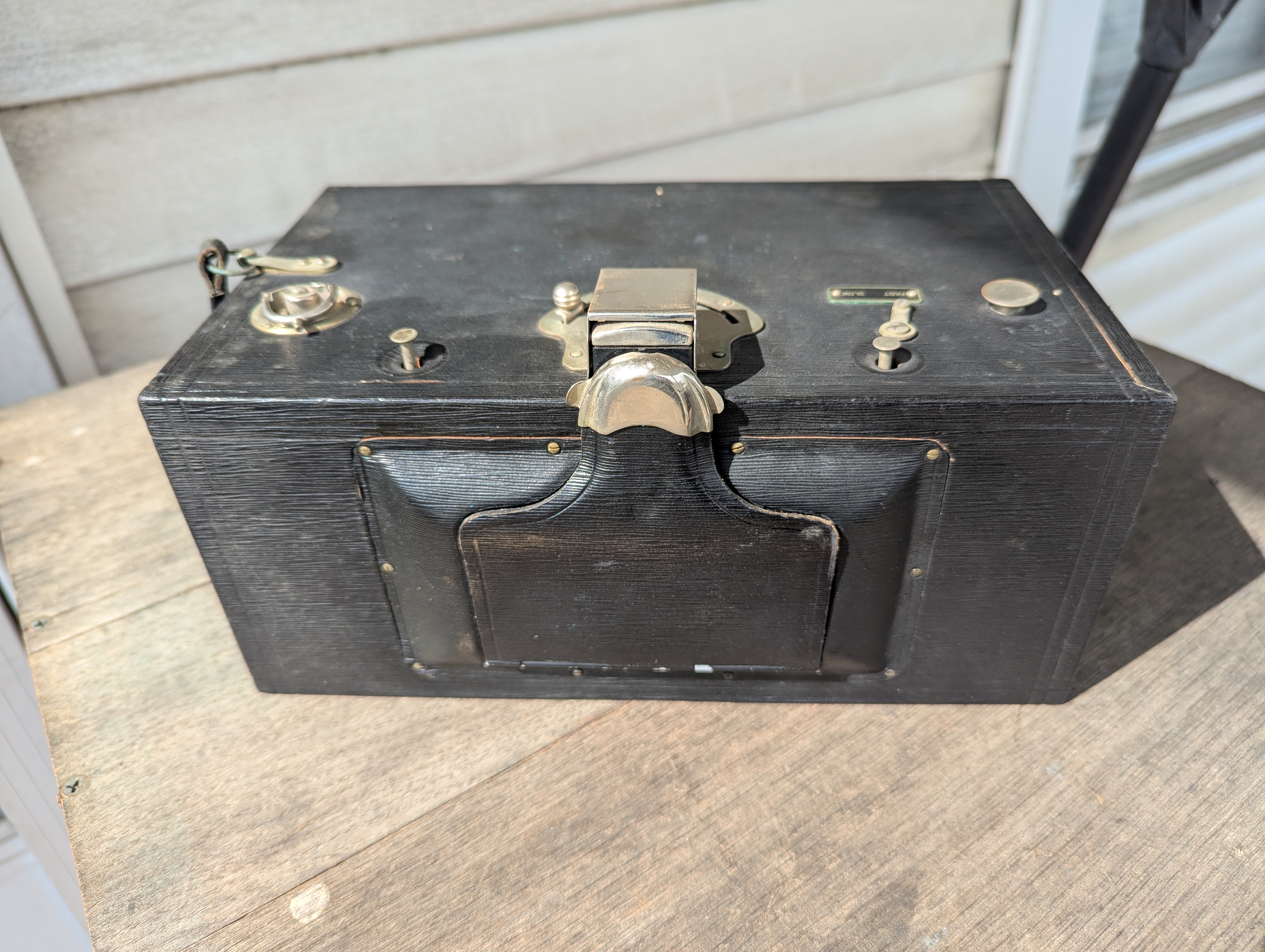
This is the Kodak Panoram 3A camera, and it’s 100 years old. This is one of the early Kodak “Panoram” cameras (there was also a Model 1 and a Model 4) that took ultrawide photos on medium-format film. However … although these cameras can still create incredible images long after their warranties expired, they are still finicky little beasts. And they also use film widths and lengths that Kodak no longer manufactures.
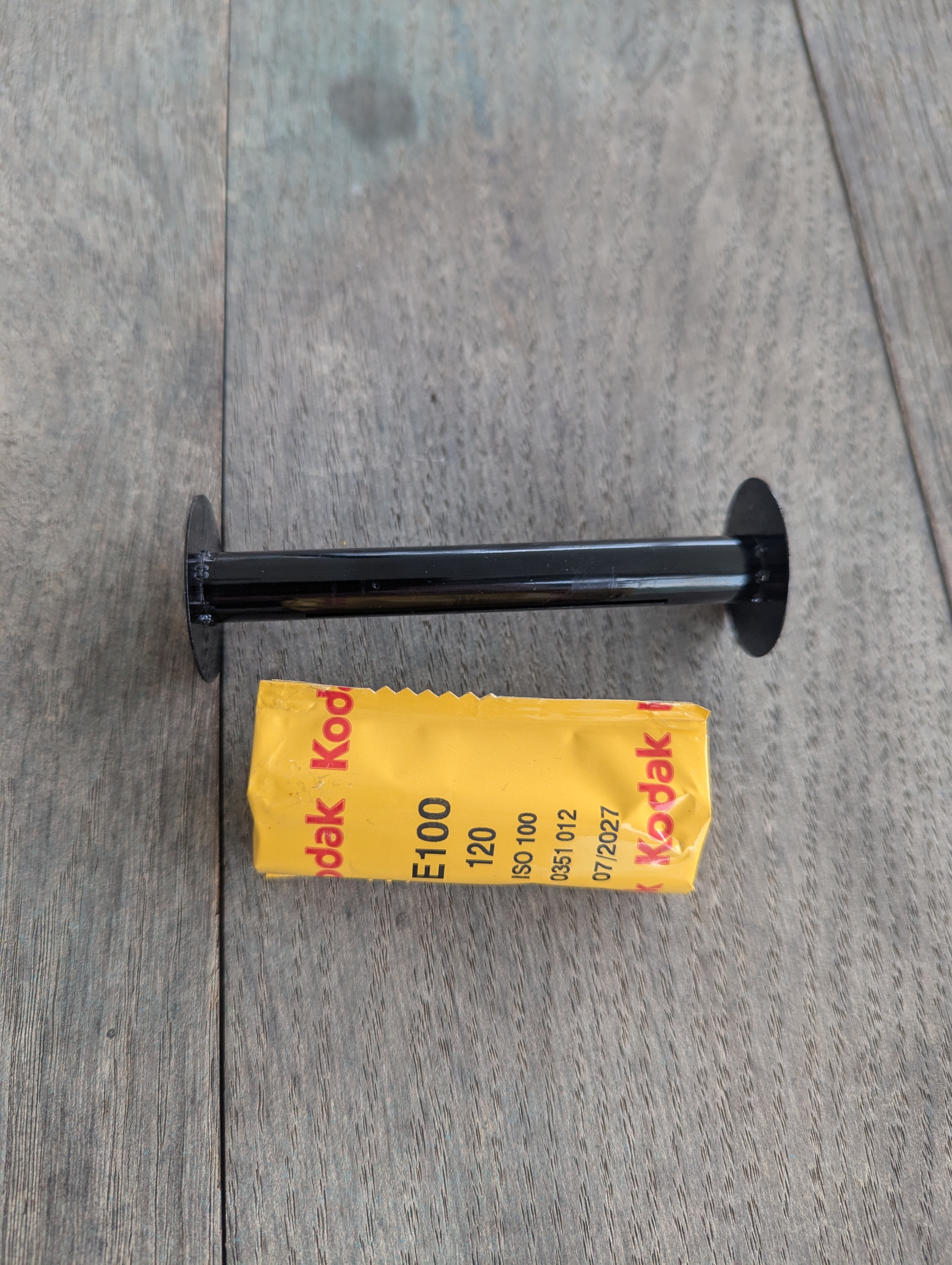
Seriously. That’s a 122 spool on top; and as you can see, it’s a wee bit larger than the 120 film in the package.
So how do I get around this?
Thankfully, there’s some DIY hobbyists who have 3D-printed special internal modifications for these Panorams to accept modern 120 film. If this works, I should be able to snag five to six different panoramas from one normal 12-exposure 120 roll of film (I’m suspecting I can only use 120 film because that film has black backing paper; 220 film, which has no backing paper, is out of the question).
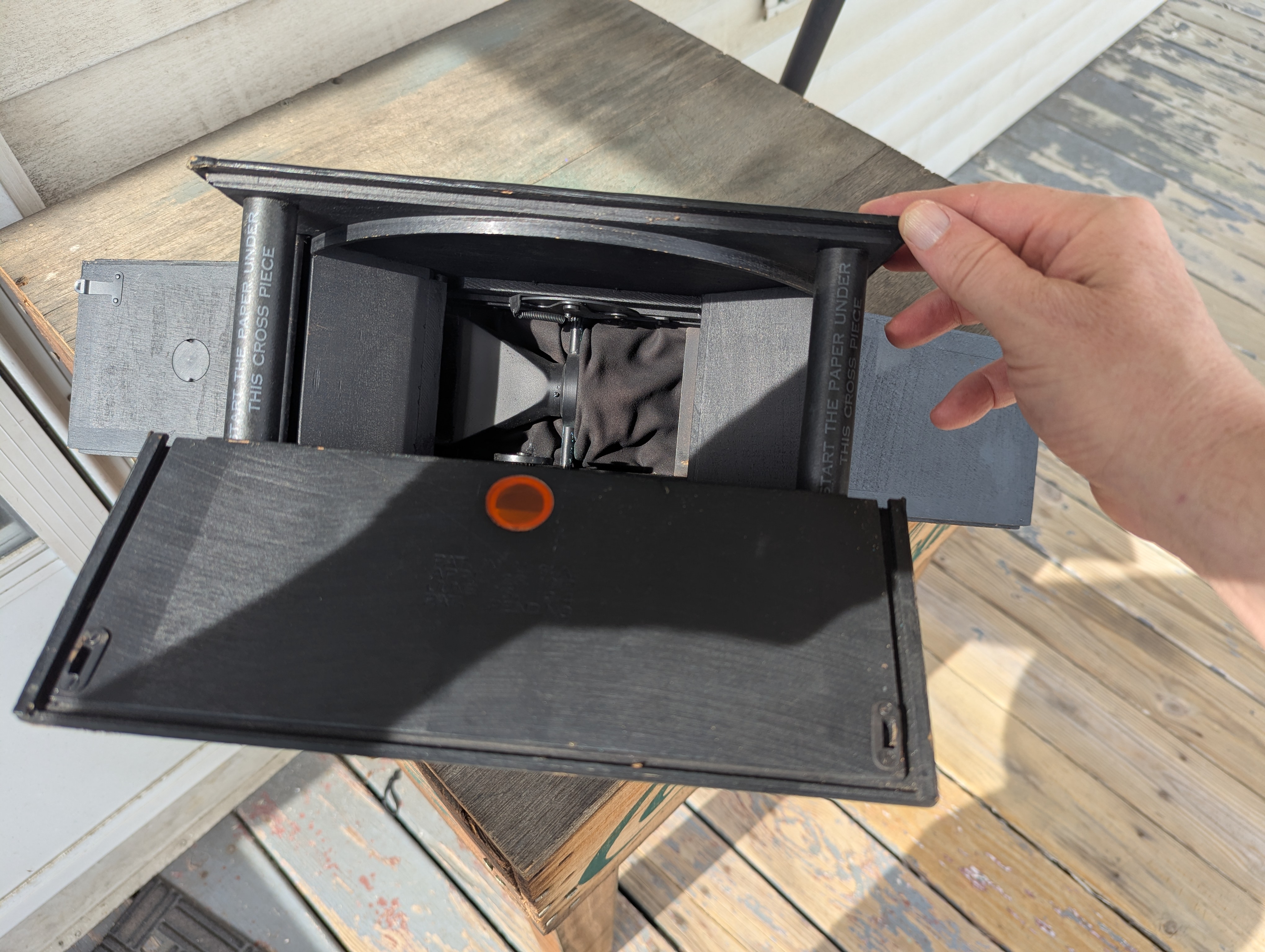
Look at the interior of this thing. You can hide your entire collection of Lego minifigs inside.
Okay, now it’s time to test the lens. This unit employs a swing lens mechanism, you lock the shutter in place and press the shutter button, and the lens swings to capture the entire panoramic image in a second.
Woah. That’s freakin’ awesome. It still works after 100 years.
The seller informed me that this camera was originally owned by an employee who worked at the Doheney Estate in California (also known as Greystone Mansion), so this bad boy has a bit of a pedigree and a provenance to it.
And although this camera is essentially a fixed-focus shooter, supposedly I should be able to keep all objects in focus, so long as those objects are at least 20 feet away from the camera.
So … we’ll test this out. I’ve got a few rolls of 120 film that I can burn off, let’s see if anything comes from my efforts.
I started with a few shots at the Cohoes Falls. At the moment, I’m still trying to figure out how many captures I can get on a roll of film – but it kinda looks like if I get three shots, I’m a lucky man.
This was the best of the batch, as captured with Kodak Tri-X 400 film.
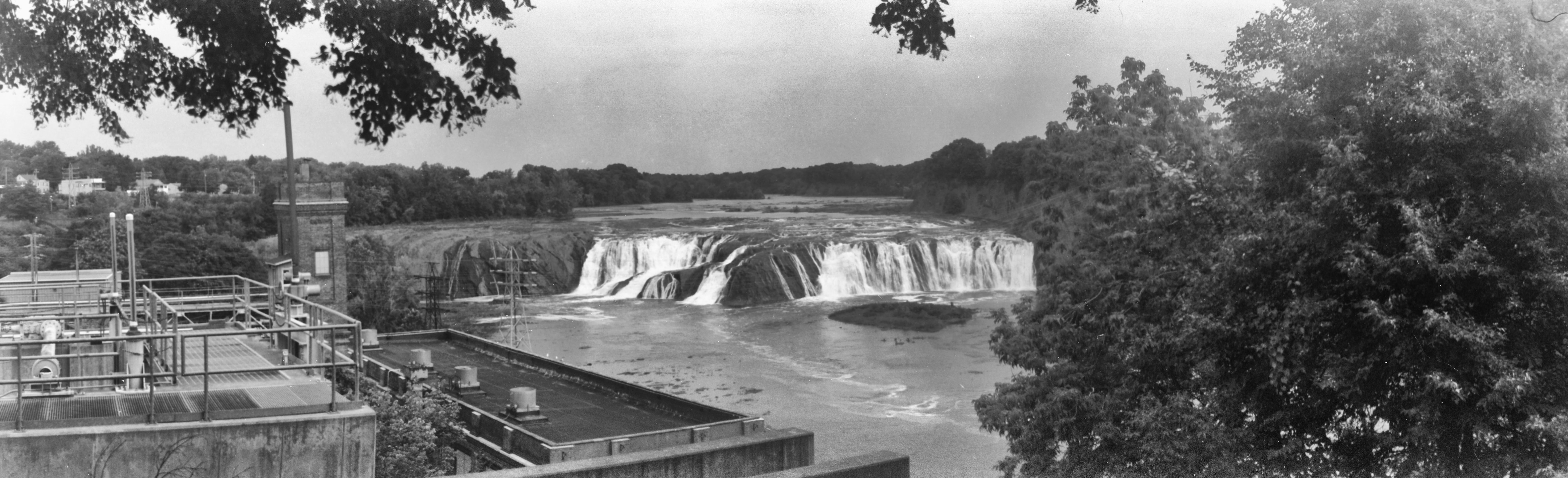
Not bad for a first try. Maybe next time don’t try to capture the industrial generator and the big tree on the sides.
All right, let’s try a second roll. I’m on a trip to drop my stuff off at the New York State Fair, let’s pit-stop at Hamilton College, throw a roll of Kodak Portra 800 in the Panoram, and try my luck.
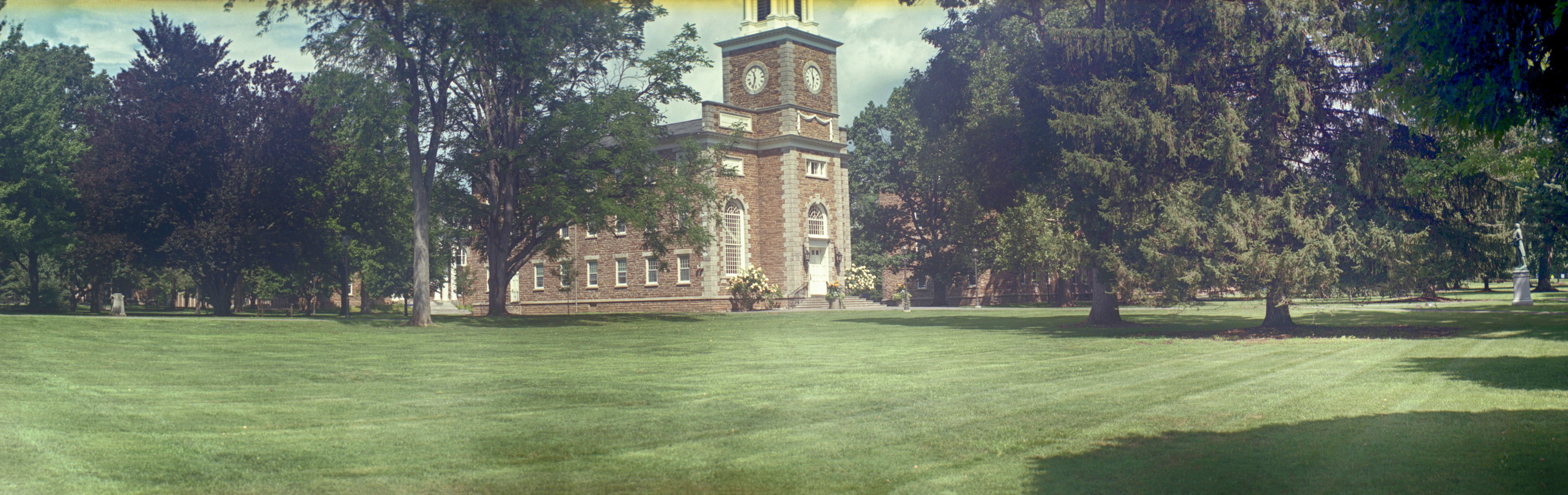
Yikes. I’m sure you can tell what’s wrong with this picture. Especially when you’ve seen my Hamilton College photos in the past.
THE CHAPEL TOWER IS CUT OFF! NOOOOO!!!
Mental note. Using this camera requires more distance for taller objects. So if I use this for a forest or something along those lines, it should work – but tall buildings will be tricky. And whatever viewfinder this camera has was built 125 years ago and designed for film that was thicker than the current 120 stock I’m using – so I have to take all THAT into consideration next time.
And one more thing. If I use this camera in the future, I need fast film – 400 speed or 800 speed. That, or try to “push” slow stock and hope for the best. But if I’m getting two or three good shots on a 12-shot roll, and then paying extra surcharges for ultrawide development … I have to make every exposure count. Every single time.
That being said, I have a few options for trying this camera in the future. I’m not calling these experiments failures … but we’re still in the hypothesis stage.
And we can go from there, for sure.


I had one of those. Shot some of the 122 film in it (yes, I’m that old). One thing I discovered was that even on a tripod the thing can blur and image because of the motion of that swinging lens.
LikeLike